Overview of the Department
The Department of Commerce established in the year 1996 is one of the pioneer departments of the college known for remarkable growth and achievement. It was started with a vision of providing scope for excellence in the field of commerce by imparting value based education combined with training and skill development. The primary aim of the department has been to make commerce students respond to the changes in the society through the development and application of knowledge with a view to promote and protect dignity, equality and social justice. The Department enables the students to acquire theoretical and practical knowledge blended with professional skill set and thereby contribute to the world as professionally equipped global citizens.
VISION
To develop in to a globally competent center of excellence in the field of commerce
MISSION
To impart holistic education to enable world class perspective thro’ value based education
To motivate and empower students to become innovative leaders
To involve projects leading to research with a view to enhance students to develop into successful and qualified entrepreneurs
To continuously evaluate performance against suitable benchmarks and have tie ups with reputed Organisations.
Eligibility criteria
Prospective candidates must have completed their plus two education in commerce and accountancy.
HIGHLIGHTS OF THE DEPARTMENT
- Established in the year 1996, celebrating 29 years of academic excellence
- Produced many University Ranks
- Good Placement Record
- Students are well placed in Multi National Companies in India and Abroad
- Encouragement and support to the students to become Chartered Accountants and Cost Accountants
- Academic excellence through consistent and dedicated teaching
- Exposure to Industry through collaborative programs and industrial visits
- Organised National Conclaves and International Conferences
- Exclusive skill development program for girls
- Special training for digital transformation in collaboration with IT Companies and MNCs
- Promoting research through paper presentations
- Empowering students in curricular, co-curricular,outreach and sports activities
- Promoting entrepreneurship skills through Vision Tank Start up idea generation programmes
- Encouragement to students for knowledge enrichment through NPTEL Courses
- Training for personality and holistic development
A B.Com General degree opens doors to a wide range of career paths in various sectors like accounting, finance, banking, marketing, and government jobs. Graduates can also become Professionals by doing courses like CA, CMA, ICWA and ACS along with their under graduation in B.Com. Students can also explore their skills in entrepreneurship.
Some of the prospective jobs are given below:
- Accountant
- Internal Auditor
- Banking Officer
- Business Analyst
- Financial Analyst
- Credit Risk Officer
- Customer Relationship Manager
- Financial Services Executive
- Marketing Executive
- Human Resource Executive
- E-Commerce Manager
- Inventory Manager
- Investment Advisor
- Payroll/AR/AP Associates
- Financial Associates in IT Companies
- Stock Securities Analyst
Program Outcomes (PO's)
- PO1: Disciplinary knowledge: Capable of demonstrating comprehensive knowledge and understanding of one or more Disciplines that form a part of an Undergraduate Programme of Study.
- PO2: Communication Skills: Ability to express thoughts and ideas effectively in writing and orally; Communicative with others using appropriate media: confidently share one’s views and express herself / himself; demonstrate the ability to listen carefully, read and write analytically and present complex information in a clear and concise manner to different groups.
- PO3: Critical Thinking: Capability to apply analytic thought to the body of knowledge; analyse and evaluate evidence , arguments, claims, beliefs on the basis of empirical evidence; identify relevant assumptions or implications; formulate coherent arguments; critically evaluate practices, policies and theories by following scientific approach to knowledge development.
- PO4: Problem Solving: Capacity to extrapolate from what one has learnt and apply their competencies to solve different kinds of non- familiar problems, rather than replicate curriculum content knowledge; and apply one’s learning to real life situations.
- PO5: Analytical Reasoning: Ability to evaluate the reliability and relevance of evidence; identify logical flaws and holes in the arguments of others; analyse and synthesize data from the variety of sources; draw valid conclusion and support them with evidence and examples and addressing opposing viewpoints.
- PO6: Research-related skill: A sense of inquiry and capability for asking relevant / appropriate questions, problem arising, synthesising and articulating, Ability to recognise cause and effect relationships, define problems, formulate hypothesis , analyse and interpret and draw conclusions from data, establish hypothesis, predict cause and effect relationships, execute and report the results of an experiment or investigation.
- PO7: Co-operation/Team work: Ability to work effectively and respectfully with diverse teams; facilitate cooperative or coordinated effort on the part of a group, and act together as a group or a team in the interests of a common cause and work efficiently as a member of the team.
- PO8: Scientific reasoning: Ability to analyse, interpret and draw conclusions from quantitative or qualitative data: and critically evaluate ideas, evidence and experiences from an open minded and reasoned perspective.
- PO9: Reflective thinking: Critical sensibility to lived experiences, with self awareness and reflexivity of both self and society.
- PO10: Information/Digital Literacy: Capability to use ICT in variety of learning situations, demonstrate ability to access, evaluate and use a variety of relevant information sources, and use appropriate software for analysis of data.
- PO11: Self-directed learning: Ability to work independently, identify appropriate resources required for a project and manage a project through to completion.
- PO12: Multicultural competence: Posses knowledge of values and belief of multiple cultures and global perspective: and capability to effectively engage in a multicultural society and interact respectfully with diverse groups.
- PO13: Moral and Ethical awareness /reasoning: Ability to embrace moral/ethical values in conducting one’s life, formulate a position/argument about an ethical issue from multiple perspectives and use ethical practices in all work. Capable of demonstrating the ability to identify ethical issue’s related to one’s work, avoid unethical behaviour such as fabrication, falsification or misrepresentation of data or committing plagiarist, not adhering to intellectual property rights; appreciating environmental and sustainability issues; and adopting objective, unbiased and truthful actions in all aspects of work.
- PO14: Leadership readiness/qualities: Capability for mapping out the task of the team or an organisation, and setting direction, formulating and inspiring vision, building a team who can help achieve the vision, motivating and inspiring team members to engage with that vision and using management skill to guide people to the right destination in a smooth and efficient way.
- PO15: Life Long Learning: Ability to acquire knowledge and skills, including “learning how to learn” , that are necessary for participating in learning activities throughout life, through self-paced and self-directed learning aimed at personal development, meeting economic, social and cultural objectives and adapting to changing trades and demands of workplace through knowledge/skill development/reskilling.
Program Specific Outcomes (PSO's)
- PSO1 – Placement: To prepare the students who will demonstrate respectful engagement with others ideas, behaviours, beliefs and apply diverse frames of reference to decisions and action. Further the students are encouraged with add-on value based and job oriented courses which ensure them to sustain in the organisation level.
- PSO2 – Contribution to Business World: Apply theoretical concepts to business practices to produce employable, ethical, and innovative professionals to sustain in the dynamic business world.
- PSO3 – Contribution to the Society: To contribute to the development of the society by collaborating with stakeholders for mutual benefit. Become acquainted with commercial knowledge and soft skill to react in the most appropriate way when faced with challenges in the society.
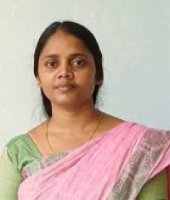
Mrs. S. Uma Maheswari B.Com,M.Com (Ph.d)